
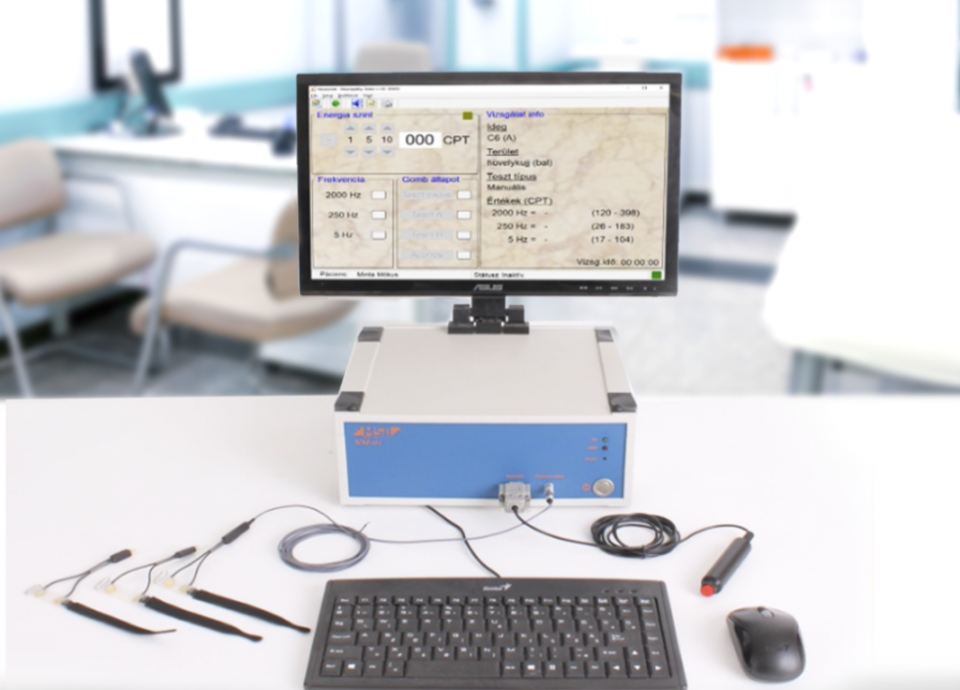
Cardiac Autonomic Neuropathy Assessment System
The Cardiac Autonomic Neuropathy measurement and evaluation system identifies pathological cardiovascular changes associated with metabolic diseases. Using intelligent technology, the system measures—regardless of the ECG electrode configuration—evaluates, stores, and prints the results of the five Ewing cardiovascular reflex tests in a comprehensive medical report format.
The following examinations are available:
When configuring the examination, the system provides a predefined table containing standard reference values. The examination steps, corresponding time intervals, and test parameters can be reconfigured according to the examiner’s requirements.
Deep Breathing Test:
Determines the heart rate variation associated with respiration by assessing the difference between the shortest RR interval during inspiration and the longest RR interval during expiration, corresponding to the maximum and minimum instantaneous heart rates.
Valsalva Manoeuvre:
Assesses the heart rate response to forced expiration against a pressure of 40 mmHg for 15 seconds. The Valsalva ratio is determined by comparing the longest RR interval after expiration with the shortest RR interval during the manoeuvre.
Heart Rate Response to Standing (30/15 Ratio):
After 3 minutes of resting in a supine position, the patient stands up over 5 seconds and remains standing for 1 minute. The ratio between the RR intervals at the 30th and 15th cardiac cycles is determined from the ECG recording.
Blood Pressure Response to Standing:
After 10 minutes of resting in a supine position, blood pressure is measured while lying down and then 1, 5, and 10 minutes after standing. A systolic blood pressure decrease of 10 mmHg or less indicates intact autonomic innervation. A decrease of 11–29 mmHg is considered borderline, while a decrease of 30 mmHg or more is considered abnormal.
Handgrip Test:
The patient performs a sustained handgrip for 3 minutes at approximately 30% of maximum voluntary contraction. Blood pressure is measured before the test and once every minute during the test. An increase in diastolic blood pressure of more than 16 mmHg is considered normal, 11–15 mmHg borderline, while an increase of 10 mmHg or less is considered abnormal.
The measurement and evaluation system assesses the condition of the body's superficial sensory nerve fibers in a non-invasive manner. The examination quantitatively determines the extent of pathological neuropathic changes affecting these nerve fibers.
The system uses electrical impulses at two fixed frequency ranges (5 Hz and 2000 Hz) to selectively assess the functional condition of different types of sensory nerve fibers. During the measurement, continuous comparison with healthy reference values supports real-time monitoring of the patient's condition.
The automatically evaluated data can be printed in a comprehensive medical report format. The system also includes dedicated database management software for storing and managing both the primary waveforms and the evaluated data.
All these services are available in one place:
EXCLUSIVELY at Újszeged Medical Center!
Appointments for these examinations can be booked exclusively by telephone at +36 30 440 1161.